The highest peak in a massif rarely delivers the most compelling visual perspective. Standing atop Galdhøpiggen (2,469m) or Glittertind (2,452m) places you above the surrounding horizon, flattening vertical relief in a camera viewfinder. Often, a subsidiary shoulder sitting at 1,200 to 1,600 metres directly opposite a glaciated wall or at the bend of a glacially carved trough provides far richer visual geometry, shelter from summit gales, and a safer descent path when evening temperatures drop.
This guide evaluates Norwegian viewpoints through two simultaneous filters: what the eye and lens gain, and what the body must navigate to stand there safely.
Distinguishing Scenic Appeal from Practical Suitability
Social media imagery compresses risk. A tele-compressed portrait on Trolltunga, Preikestolen, or Reinebringen omits the vertical sheer walls, eroded mud gullies, and crowd bottlenecks that complicate a descent in rain. Before committing to a viewpoint for sunrise or late-evening golden light, ask how the return trail behaves under headlamp beam when rock is wet and depth perception narrows.
"The finest mountain frames in Norway are not made in bluebird noon glare. They happen in the twenty minutes when a cold front lifts by fifty metres, revealing dark wet gabbro walls against silver glacial silt."
Field Note 19 — Hurrungane Optical Log
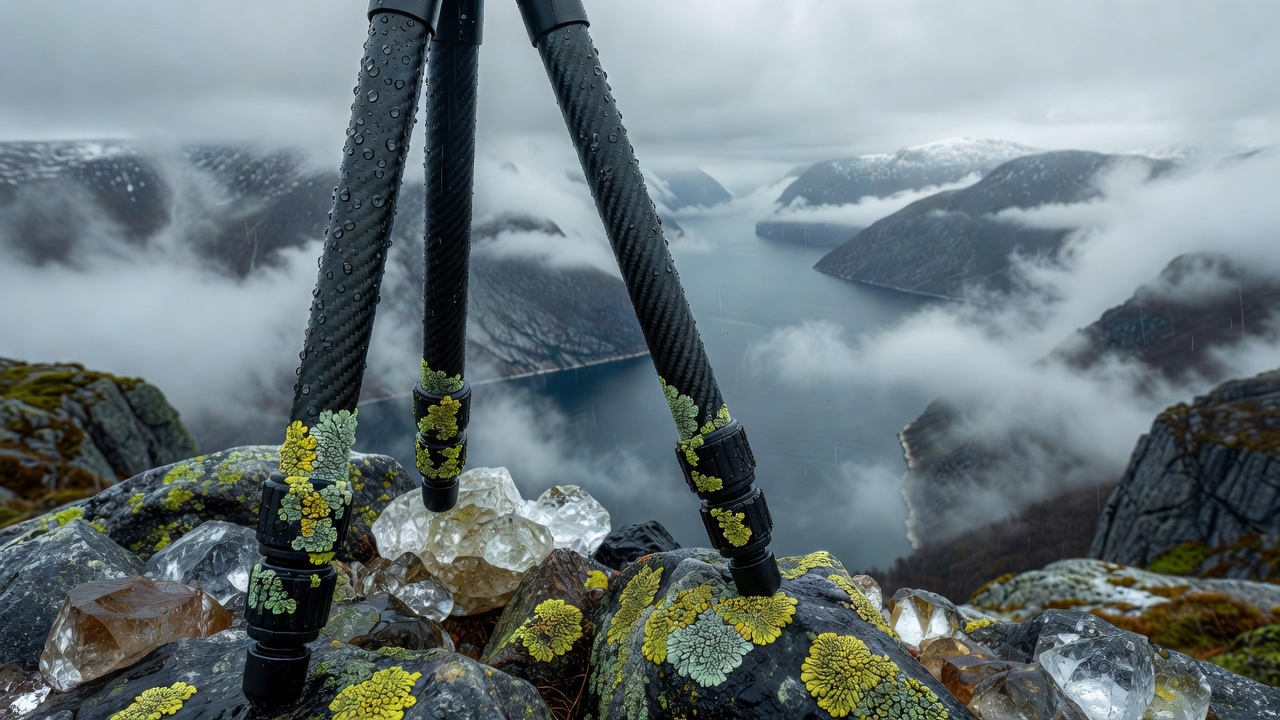
Low center-of-gravity tripod setup on Nesaksla (715m): collapsing the lower leg sections and hanging your rucksack from the center column prevents micro-vibrations in 14 m/s ridge gusts.
Five Benchmark Viewpoints Analyzed by Relief & Risk
1. Snøhetta Viewpoint Pavilion to Reinheimen Rim (Dovrefjell, 1,220m – 2,286m)
Visual Reward: Looking south across the vast, treeless tundra plateau toward the symmetrical pyramidal amphitheatre of Snøhetta and its cirque glacier. Even from the low architectural timber-and-steel pavilion at Tverrfjellet (1,220m, Green/Blue grade, 1.5 km approach), a 70–200mm telephoto lens isolates wild muskox herds and layered moraine ridges. Ascending to Stortoppen (2,286m, Red grade, 5–6 hours return from Snøheim) shifts the view into raw high-alpine boulder architecture.
2. Segla Saddle via Hesten (Senja, 520m)
Visual Reward: Climbing Segla itself places you on top of the rock sail you want to photograph. Climbing the neighboring ridge of Hesten places you directly across a dramatic gulf looking onto Segla's 639-metre vertical granite drop into Mefjorden. Exposure Note: The grassy and rocky steps below the saddle become slick with coastal sea mist; keep five metres back from the unguarded cliff lip where overhanging turf cornices can fracture.
3. Storronden West Shoulder (Rondane, 1,750m – 2,138m)
Visual Reward: Warm iron-oxide lichens and pale quartzite bands glow vivid amber during late August sunsets, framing the deep glacial trough of Langglupdalen. Exposure Note: Above 1,600 metres the trail consists entirely of loose quartzite blockfield. If photographing last light, carry two independent headlamps and mark key cairn turns with reflective tape tabs that you collect on descent.
4. Bakkanosi above Nærøyfjorden (Aurland, 1,398m)
Visual Reward: A sweeping, quiet alternative to tourist cruisers below, peering 1,400 vertical metres straight down into the UNESCO narrows of Nærøyfjorden. Exposure Note: A 20 km round trip over undulating plateau terrain with late-lying snow patches well into July. Zero shelter along the route; if fog rolls in from Sognefjorden, visibility drops to compass-only bearings within ten minutes.
5. Ryten above Kvalvika Beach (Lofoten, 543m)
Visual Reward: Moderate elevation yields an extraordinary visual contrast between dark, jagged metamorphic peaks, pale arctic sand crescents, and emerald surf. Exposure Note: Heavy foot traffic has widened peat sections into slick mud channels; use the timber boardwalks and wear gaiters to keep grit out of boot cuffs.
Field Photography Craft in Wet & Windy Fjell Conditions
Carrying optical equipment across demanding mountain trails requires ruthless weight discipline and weather hardening. A drenched camera sensor or fogged front element ends a shoot instantly.
Focal Length Economy: A weather-sealed 24–105mm f/4 lens covers 90% of fjell compositions, from foreground lichen patterns at 24mm to compressed ridge layers at 105mm, avoiding risky lens swaps in wind-driven spindrift or mist.
Circular Polarizer Discipline: Essential for cutting sky glare off wet slate, damp birch leaves, and shallow alpine tarns, revealing submerged stone textures and boosting autumn foliage saturation.
Thermal Acclimatization: Keep spare lithium-ion batteries in an inside chest pocket close to body heat. Before entering a warm DNT cabin from sub-zero ridge air, seal your camera inside a drybag so condensation forms on the bag exterior rather than on cold glass elements.
Microfiber & Blower Routine: Carry three sealed microfiber cloths in separate zip-lock pouches; once a cloth absorbs skin oils or salt spray near coastal fjords, it smears water droplets across the lens coating.