Meteorology & Kit Architecture
Prepare for a Change of Sky
Norway's western spine rises abruptly from the North Atlantic, forcing moist maritime air masses upward over 2,000-metre plateaus. This orographic lift generates rapid condensation, sharp temperature gradients, and localized venturi winds through high passes. A walker departing a sheltered fjord village at 18°C can encounter 3°C horizontal sleet and 18 m/s gusts just 900 vertical metres higher.
Preparation is not about carrying the heaviest rucksack on the mountain; it is about eliminating single points of failure in your clothing, navigation, and shelter systems.
The Norwegian Mountain Code (Fjellvettreglene)
Jointly maintained by the Norwegian Red Cross (Røde Kors) and DNT, the nine rules of the Mountain Code form the cultural and operational backbone of Norwegian outdoor life:
- Plan your trip and inform others about the route you have selected. Leave a route card at your cabin or with a trusted contact.
- Adapt the planned routes according to ability and conditions. Judge the weakest link in your party honestly.
- Pay attention to the weather and the avalanche warnings. Cross-check Yr.no and Varsom.no before losing cellular coverage.
- Be prepared for bad weather and frost, even on short trips. Treat a three-hour hike with the same core layers as a full-day traverse.
- Bring the necessary equipment so you can help yourself and others. Wind sack, foam mat, first-aid kit, and warm drink.
- Choose safe routes. Recognize avalanche terrain and unsafe ice. Avoid cornices, steep leeward snow slopes, and thin inlet/outlet lake ice.
- Use a map and compass. Always know where you are. Follow your progress continuously on paper rather than waiting until you are lost.
- Turn back in time; there is no shame in turning around. The mountain remains next season.
- Conserve your energy and seek shelter if necessary. Dig in or deploy your wind sack before hypothermia impairs fine motor skills.
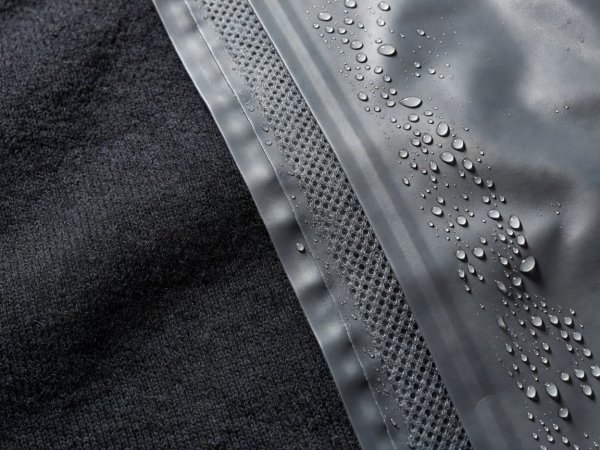 Layer 1 & 3
Thermoregulation • Moisture Transfer
Wool Mesh & Hardshell
Open-mesh wool base layers trap warm air pockets while preventing clammy fabric cling during steep ascents; pair with a 28,000mm hydrostatic-head shell.
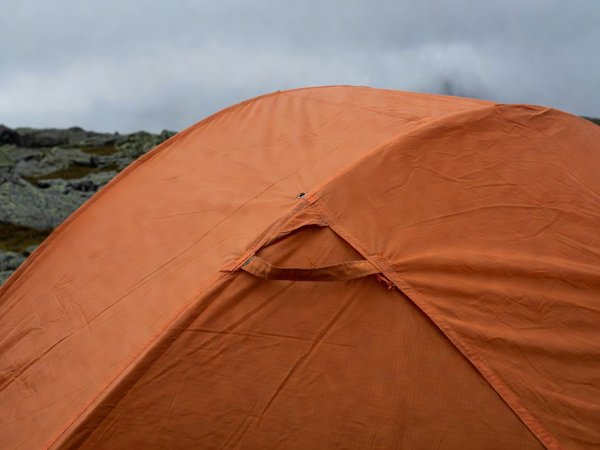 Bivouac Core
450 Grams • Instant Microclimate
The Two-Person Vindsekk
More practical than a tent for day hikes: pulled over two seated hikers on a foam pad, body heat raises the internal temperature by 10°C within minutes.
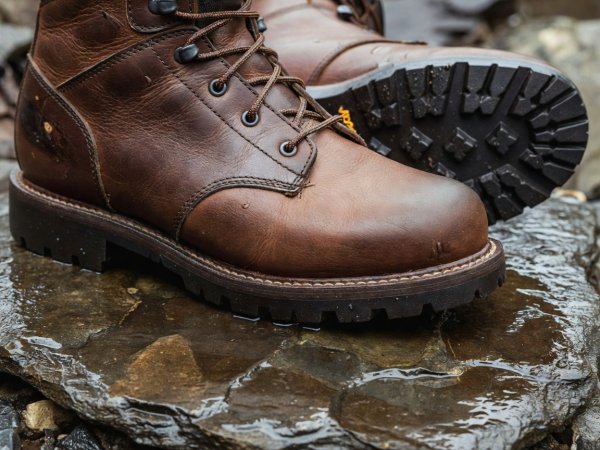 Chassis
Ankle Support • Water Resistance
Waxed Full-Grain Leather
Sharp quartzite scree shreds lightweight mesh trail runners in a single week; thick beeswaxed leather resists abrasion and sheds bog water all day.
Interpreting Norwegian Mountain Forecasts
When consulting the Norwegian Meteorological Institute via Yr.no, never check the valley town name (such as Lom, Odda, or Åndalsnes) and assume it applies to the ridge above. Search specifically for the mountain summit elevation or high pass name. Apply three rules when reading the meteogram:
- The Dry Adiabatic Lapse Rate: Temperature drops roughly 0.65°C to 1.0°C for every 100 metres of elevation gain. If the valley floor sits at 12°C, a 1,600-metre ridge will hover near freezing before accounting for windchill.
- Sustained Wind vs. Gusts (Kast): On Yr.no, wind speed is listed as sustained speed followed by gusts in parentheses, e.g., 12 (19) m/s. At 15 m/s, walking upright against the wind becomes strenuous; at 20 m/s, loose gravel becomes airborne and balance on narrow ridges is compromised.
- Cloud Base Height (Skydekke): Low cloud cover (lavt skydekke) above 80% means summits above 1,000 metres will likely be enveloped in dense fog. In fog over snowfields or featureless plateaus, visual contrast vanishes completely.
Standard Daypack Loadout Matrix (July – September)
| System Category |
Mandatory Field Item |
Operational Purpose |
| Shell Protection |
3-layer waterproof jacket & full-zip shell trousers |
Blocks wind-driven rain and wet snow; full side-zips allow putting trousers on over muddy boots. |
| Static Insulation |
Packable synthetic or hydrophobic down jacket + extra wool base top |
Put on immediately at summit stops or during an injury halt to prevent post-exertion chill. |
| Extremities |
Windproof mittens, wool liner gloves, wool beanie, buff |
Cold fingers cannot operate compass bezels, zippers, or camera dials. |
| Shelter & Ground |
2-person wind sack (vindsekk) + closed-cell sitting pad |
Insulates the body from conductive heat loss against cold wet rock during lunch or emergencies. |
| Navigation & Light |
1:50,000 paper map, baseplate compass, 300-lumen headlamp, powerbank |
Guarantees route finding if cloud drops or a slow descent pushes you past dusk. |
| Medical & Repair |
Compeed blister plasters, elastic ankle bandage, zinc tape, multi-tool, steel thermos |
Hot sweet tea in a vacuum flask restores core warmth faster than dry rations alone. |