Mainland Norway safeguards 40 national parks, the majority encompassing high-altitude mountain plateaus, glaciers, and sub-arctic valleys. Unlike national parks in many other countries, Norwegian parks do not feature entrance gates, ticket booths, or paved visitor loops. Protection relies on the self-discipline of every walker entering the landscape.
The legal foundation of outdoor access in Norway is Friluftsloven (The Outdoor Recreation Act of 1957), which codifies Allemannsretten—the right of free access to uncultivated land (utmark). However, every right under the Act is paired with an explicit statutory duty of care: to move without causing damage, disturbance, or litter.
The Core Rules of Allemannsretten in the Mountains
The 150-Metre Tent Rule: You may pitch a tent for up to two consecutive nights on uncultivated land without the landowner's permission, provided the tent sits at least 150 metres away from the nearest inhabited house or cabin. In high mountain areas (høyfjell) far from settlements, you may camp longer than two nights.
National Seasonal Campfire Ban: Between 15 April and 15 September, lighting open fires in or near forests and uncultivated vegetated land is strictly prohibited by law. Use a self-contained gas or multi-fuel stove on bare stone or gravel, and never snap branches from living or standing dead mountain birch or pine.
No Decorative Cairns (Varder): Building tourist stone stacks disrupts official navigation cairns maintained by DNT and strips alpine beetles and spiders of their thermal rock shelters. Never add stones to or alter existing cairns unless participating in an authorized trail crew.
Sanitation Above the Treeline: In cold, dry alpine soils, toilet paper takes years to decompose and is frequently unearthed by frost heave or wildlife. Dig a cathole at least 60 metres away from any water source or trail, pack out used paper in sealed barrier bags, and never bury waste in snowpatches (which melt directly into drinking streams).
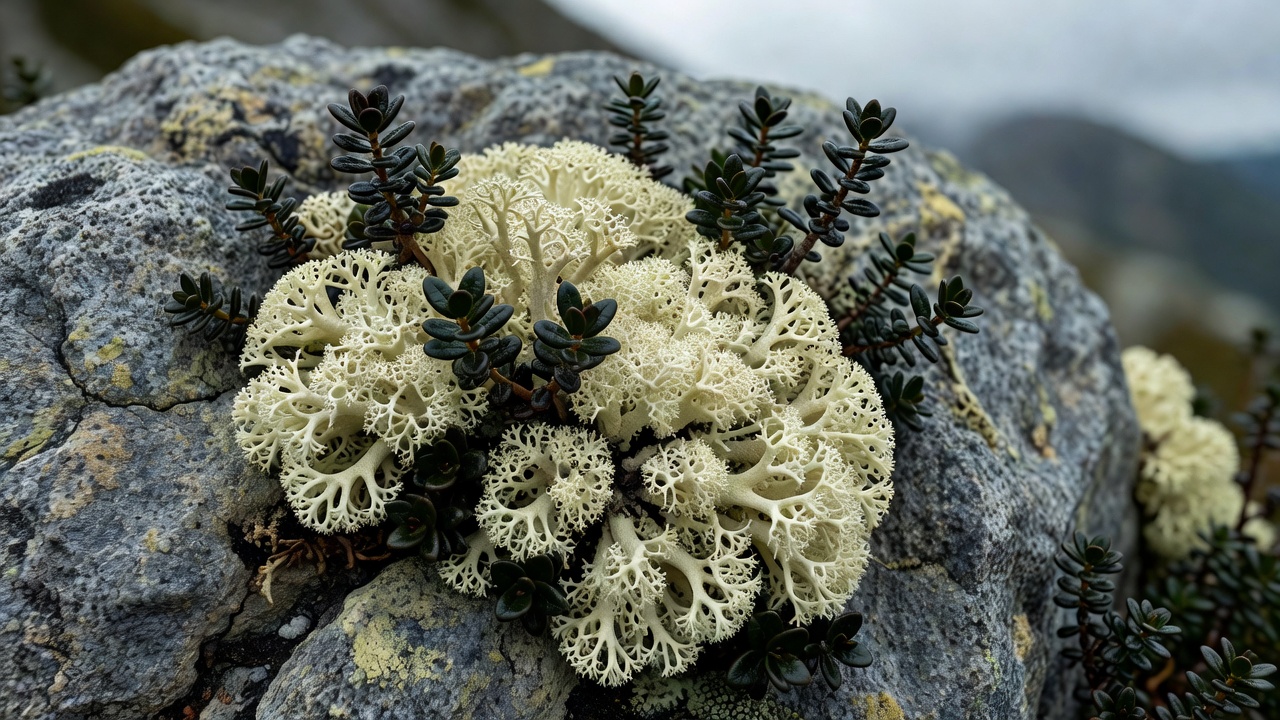
"Reindeer lichen (kvitkrull) takes thirty years to regenerate after being crushed by a careless shortcut in dry August weather. Walk on durable stone, not the pale carpet beside it."
Field Note 27 — Rondane Ecological Survey
Cladonia stellaris (reindeer moss) in Rondane National Park: brittle as dry coral during dry spells, yet resilient when hydrated by mist.
Four Principal Mountain National Parks & Their Sensitivities
1. Rondane National Park (Established 1962, 963 km²)
Norway's oldest national park was created specifically to protect one of Europe's last genetically pure populations of wild mountain reindeer (Rangifer tarandus tarandus). In recent years, several historic trails and cabin sections have been seasonally rerouted or closed to reduce human fragmentation of calving and grazing areas. Stay strictly on marked paths, keep dogs on a short leash at all times (mandatory nationwide from 1 April to 20 August, and extended through autumn in many mountain municipalities), and sit quietly downwind if you spot a herd on the horizon.
2. Jotunheimen National Park (Established 1980, 1,151 km²)
Home to all 29 of Norway's highest peaks above 2,300 metres, Jotunheimen combines heavy glacial ice with concentrated visitor corridors around Gjende, Leirvassbu, and Spiterstulen. Never walk onto a glacier (bre)—even flat-looking snow bridges at the snout of Svellnosbreen or Smørstabbreen conceal deep crevasses—without roped glacier equipment and certified training. When camping near popular valley portals, use designated tent zones to prevent widening bare soil scars across fragile alpine meadow.
3. Dovrefjell-Sunndalsfjella National Park (Established 2002, 1,693 km²)
A unique biogeographical refuge harboring wild reindeer, arctic foxes (fjellrev), golden eagles, and an introduced herd of high-arctic muskoxen (moskus). Mandatory Muskox Safety Rule: Maintain a minimum distance of 200 metres from muskoxen at all times. Despite their stocky appearance, a 400-kilogram bull can sprint at 60 km/h across uneven boulder terrain. If an animal stops grazing, stares at you, snorts, or rubs its head against its forelegs, back away slowly without turning your back or running.
4. Hardangervidda National Park (Established 1981, 3,422 km²)
Europe's largest high-mountain plateau supports vital breeding grounds for arctic shorebirds and snowy owls during lemming peaks, alongside Norway's largest wild reindeer stock. Because wind sweeps unimpeded across the flat horizon, any discarded plastic wrapper is blown kilometres into pristine mire. Secure every pocket zipper and pack cover strap before climbing onto the plateau.